Physical Address
304 North Cardinal St.
Dorchester Center, MA 02124
Physical Address
304 North Cardinal St.
Dorchester Center, MA 02124
Accountability Centered Maintenace
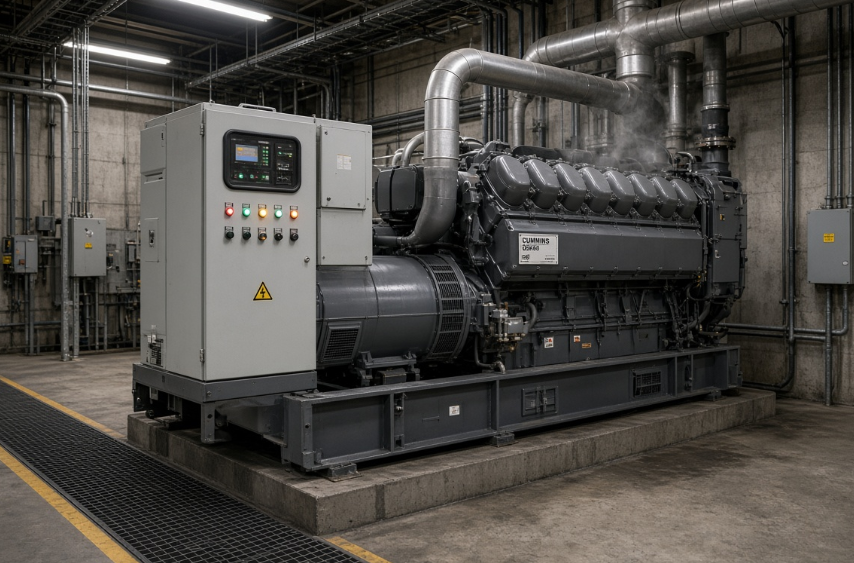
A generator running 12 hours a day isn’t the same machine, maintenance wise, as one that starts twice a month during a blackout. The difference isn’t just wear and tear, it’s a formally different duty class.
Our guide to generator maintenance in Lagos touches on this briefly, near-continuous run-time is one of the two things that make Lagos maintenance genuinely different from a typical backup setup elsewhere. This post is the full picture, what actually changes operationally and mechanically once a generator stops being backup and becomes primary power for large stretches of the day.
Generator manufacturers rate every unit for a specific duty class, and the distinction is more precise than most people assume. Caterpillar’s own technical guidance on generator set ratings lays out the three that matter most here:
| Rating | What It’s Built For |
|---|---|
| Standby | Emergency backup at nameplate rating for the duration of an outage. Average load factor should stay under 70%. Capped at a maximum of 500 running hours per year. |
| Prime | Unlimited running hours at a varying load, with an average load factor of no more than 70% of the Prime rating. A 10% overload allowance exists for emergencies, limited to 1 hour in 12 and 25 hours a year. |
| Continuous | Unlimited hours powering a non-varying load, running at 70 to 100% of rating essentially all the time. Built for base loading, not intermittent duty. |
A generator sold and installed as a Standby unit is not the same machine, mechanically, as one rated for Prime or Continuous duty, even if the nameplate kVA is identical. Running a Standby rated unit the way Lagos facilities often actually use their generators, well beyond 500 hours a year, at a load factor that doesn’t stay comfortably under 70%, pushes the machine outside the operating envelope it was engineered and warrantied for.
Every point in this post assumes you actually know how many hours your generator has run, and most facilities don’t track this precisely enough. This is exactly the gap covered in our piece on the PowerFix Digital Monitor, a generator running 10 to 12 hours a day crosses the standard 250 to 300 hour service interval in under a month, which means calendar based scheduling alone is actively unreliable for continuous run installations. Run-hours have to be tracked directly, not estimated from the calendar.
Cooling systems designed around intermittent operation get real recovery time between runs. A generator running most of the day doesn’t get that recovery window, heat builds cumulatively rather than dissipating fully between starts.
A generator running a few hours a month has forgiving fuel logistics, whatever’s in the tank usually lasts a long time and gets replaced before it becomes an issue. Continuous operation flips this entirely.
Continuous operation means the generator’s load percentage matters constantly, not just at commissioning. Two failure modes sit on opposite ends of the same problem, covered in more detail in our guide to generator maintenance in Lagos:
For a genset that’s genuinely primary power, load monitoring should be an ongoing practice, not a one time check at installation.
A generator that runs a few hours a month can reasonably be checked in on periodically. One running most of the day benefits from more consistent oversight, someone who can notice a developing issue, an unusual sound, a temperature trend, before it becomes a fault call. Some facilities handle this by expanding an existing maintenance team’s responsibilities, others bring in dedicated generator technician staffing specifically for this kind of continuous oversight, which is worth considering once a facility’s power setup has genuinely shifted from backup to primary.
If your generator has quietly become primary power rather than backup, the first useful step is knowing exactly where it stands against the benchmarks in this post, run-hours, load pattern, and whether its current duty class still matches how it’s actually being used.
Run a free PowerFix Digital Monitor check, get your generator’s health score in under 2 minutes.
Head to the PowerFix Digital Monitor tool directly, or explore PowerFix’s Annual Maintenance Contracts for a plan built around continuous use, not a backup only template.