Physical Address
304 North Cardinal St.
Dorchester Center, MA 02124
Physical Address
304 North Cardinal St.
Dorchester Center, MA 02124
Accountability Centered Maintenace
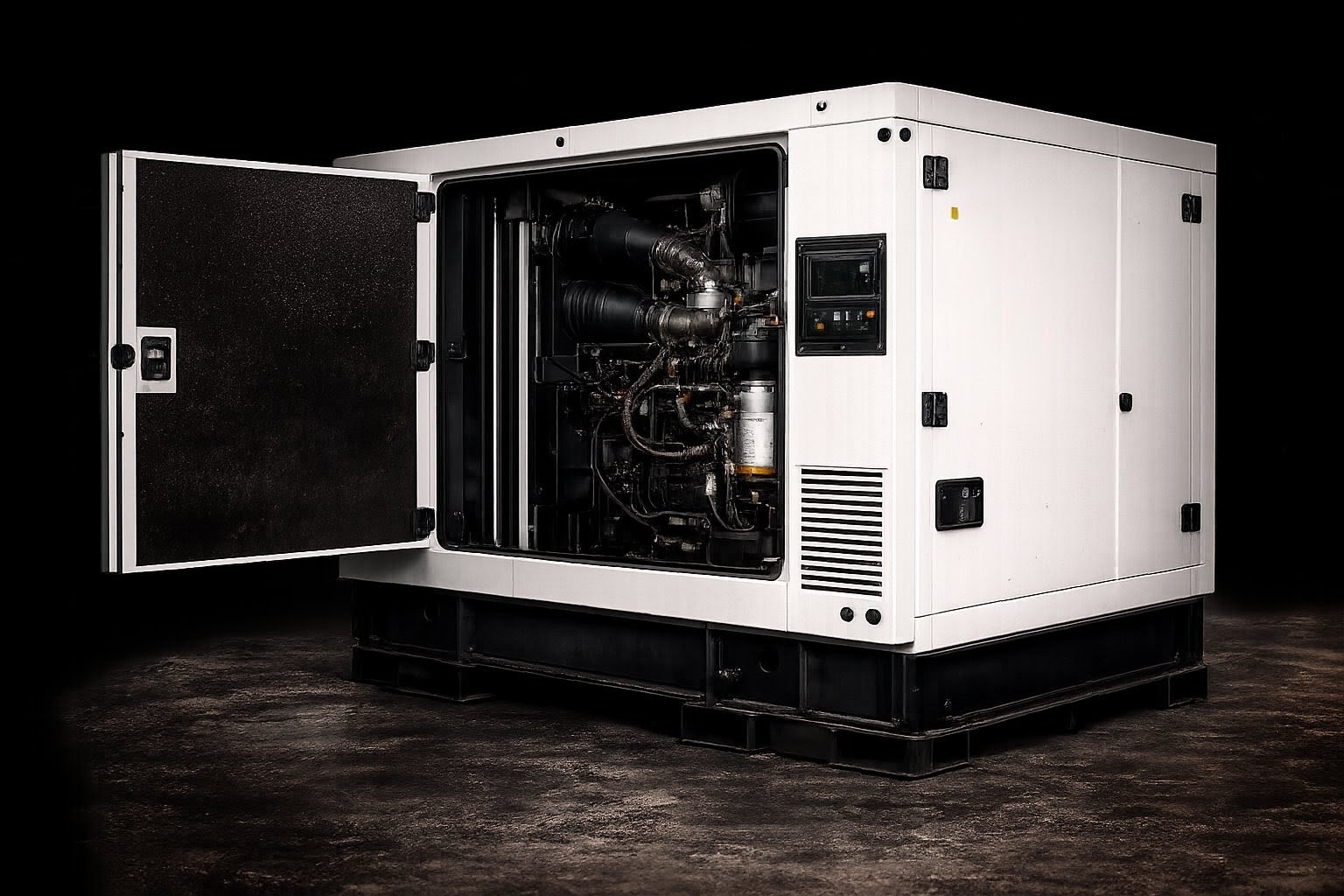
Protect Your Generator This Rainy Season | PowerFix
A few precautions now can save you a breakdown — or a flooded generator — later. Here’s what PowerFix engineers check first when the rains set in across Lagos.
Most rainy-season generator failures aren’t caused by rain hitting the unit directly — they’re caused by water finding a path in through a gap that was fine in dry season and stopped being fine in July. If you’ve already read our guide to generator maintenance in Lagos, this post goes deeper on one specific risk window: the weeks each year when humidity, standing water, and heavy downpours turn a well-running genset into a support ticket. The checks below are the ones our technicians run first on every wet-season site visit, in the order they matter most.
Two things make Lagos’s rainy season a genuinely different maintenance problem, not just a wetter version of the same routine:
That combination is why a canopy seal or a drainage channel that would be a minor annoyance elsewhere becomes an actual failure point here.
Canopy seams, cable entry points, and access panel gaskets degrade quietly over a dry season and only reveal themselves once the rains start. Check the roof seam for gaps, confirm door and panel gaskets are still compressing fully, and re-seal any cable gland that’s cracked or come loose.
Most industrial canopies are rated to a specific IP (Ingress Protection) rating — the international standard that grades how well an enclosure resists dust and water. Knowing your genset’s rated IP class is useful context here: a canopy rated for splashing water isn’t necessarily rated for the kind of direct, sustained downpour Lagos delivers, and a degraded gasket can quietly drop a unit’s real-world protection well below its rated class even if the enclosure itself looks fine.
Field note: A canopy that passed inspection in January can fail in June. Rubber gaskets dry-crack in Lagos heat, then let water through the moment rain arrives — check them every quarter, not just once a year.
If your generator sits at or below the surrounding grade, it’s a matter of when — not if — a heavy downpour puts standing water around the base. The fix is structural, not seasonal: the pad should sit raised above the surrounding ground with a slight slope directing water away, not toward, the unit. This is basic site-planning practice for any industrial generator installation, and it’s worth getting right the first time rather than retrofitting drainage after a flood.
If you’re siting a new generator rather than retrofitting an existing one, pad height and drainage should be part of the site plan from day one, not an afterthought — the same principles covered in standard industry generator site-planning guidance apply directly to Lagos conditions, just with a wider margin for error given how intense the rainy season here can get.
The automatic transfer switch panel and control wiring are the components most likely to fail from moisture rather than direct flooding — condensation and humidity ingress can trip a fault long before any visible water appears.
An ATS fault during a storm is one of the more disruptive failures a facility can have, precisely because it tends to happen at the moment you need the transfer switch working most. If your panel hasn’t been inspected this season, that’s worth treating as a priority repair rather than something to fold into the next routine visit — a full generator repair visit in Lagos can catch this alongside anything else the wet season has already started to affect.

Water contamination in diesel is one of the most common rainy-season complaints we see, and it almost always traces back to a compromised tank breather or cap seal rather than a leak in the tank itself. Water in fuel causes injector damage and hard starting — problems that show up weeks after the actual water ingress happened.
Water doesn’t just cause mechanical problems on its own — once it’s in the tank, it creates the conditions for microbial contamination, commonly called “diesel bug.” Bacteria and fungi grow at the interface between water and fuel, and left untreated, that growth clogs filters and fuel lines well beyond what the original water contamination would have caused on its own. A rainy season that lets water sit undetected in a tank for weeks is exactly the setup this problem needs.
After any significant storm, don’t just restart the generator and assume it’s fine because it starts. A short post-storm checklist catches the failures that don’t announce themselves immediately.
Every one of the five checks above shares a root cause: nobody’s tracking the generator’s real condition between scheduled visits, so a small moisture problem sits unnoticed until it becomes a bigger one. That’s the same gap covered in more detail in our guide to generator maintenance in Lagos — and it’s exactly what continuous monitoring is built to close.
Before the next downpour, know exactly where your unit stands: run-hours since last service, ATS condition flags, and whether it’s due for the kind of inspection covered above.
Run a free PowerFix Digital Monitor check — get your generator’s health score in under 2 minutes.
It’s the fastest way to catch a rainy-season vulnerability before it becomes a breakdown — or a call to PowerFix generator repair Lagos during a storm. Head to the PowerFix Digital Monitor tool directly, or see how a PowerFix generator maintenance contract covers seasonal load bank and fluid analysis testing year-round.