Physical Address
304 North Cardinal St.
Dorchester Center, MA 02124
Physical Address
304 North Cardinal St.
Dorchester Center, MA 02124
Accountability Centered Maintenace
Generator Maintenance Company in Lagos | PowerFix
Lagos runs on backup power. Between an unreliable grid, load-shedding schedules that shift without warning, and industrial operations that can’t afford downtime, a diesel generator isn’t a convenience here — it’s core infrastructure. Which means the maintenance program behind that generator matters just as much as the machine itself.
This guide breaks down what proper generator maintenance actually involves in a Lagos operating environment, what it costs, how to read the warning signs your genset is giving you, and how a structured maintenance contract compares to the “call someone when it breaks” approach most facilities default to. Where it’s useful, we’ll show how PowerFix, a generator maintenance company that Lagos operators and facility managers use for industrial and commercial gensets, approaches each of these problems. For general background on how these engines work, Wikipedia’s overview of diesel generators is a useful starting point.

Two things make the Lagos operating environment unusually hard on generators:
A maintenance company that doesn’t account for these two realities will schedule servicing on a generic calendar and miss failures that are running-hours-driven, not calendar-driven. That’s the first thing to check when vetting a PowerFix generator repair Lagos alternative — do they schedule around your actual load profile, or around a template?
This is the question every facility manager asks first, and the honest answer is: it depends on genset size, run-hours, and condition — but there are clear pricing bands.
20kVA – 100kVA (Commercial-Grade Gensets)
Typical for retail outlets, small offices, restaurants, and smaller telecom sites.
100kVA+ (Heavy Industrial Gensets)
Typical for manufacturing plants, hospitals, large hotels, and data centres.
Because these variables shift the total so much, quoting a single flat number for “generator service cost in Lagos” is misleading. The more useful benchmark is cost per operating hour, which is how a properly structured maintenance contract should be priced. If you want an actual number for your specific setup, run your genset’s specs through a PowerFix generator service cost estimate rather than relying on a generic industry average — kVA rating, oil capacity, and current run-hours change the figure enough that a real quote is the only reliable one.
Manufacturer guidance for most heavy-duty diesel gensets — including Cummins’ own maintenance guidance — sets routine servicing at every 250–300 operating hours, or quarterly — whichever comes first. This interval covers:
The 250–300 hour figure assumes intermittent, backup-only use. In Lagos, where many gensets run 8–16 hours a day, a facility can burn through 300 hours in under three weeks, not the three-to-four months the interval assumes for a typical backup application.
This is the single most common maintenance mistake we see: a facility schedules service by the calendar (e.g., “every quarter”) without tracking actual run-hours, and ends up servicing an engine that’s already 400–500 hours overdue. That gap is where premature engine wear, injector fouling, and avoidable breakdowns come from.
The fix is run-hour tracking, not calendar guessing. This is exactly the gap the PowerFix Digital Monitor is built to close — more on that below.
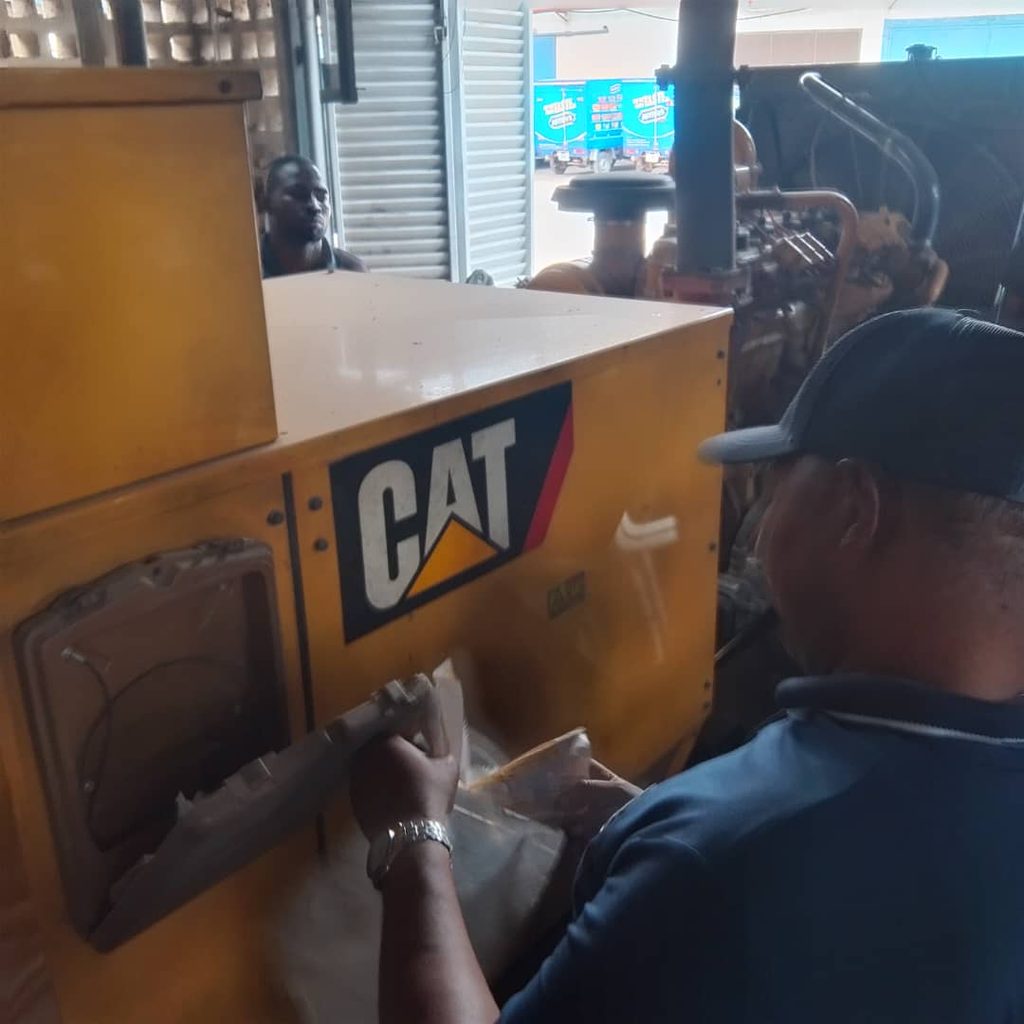
An AMC is the difference between reactive firefighting and predictable uptime. A properly structured commercial generator AMC should include:
Not calendar-only — visits scheduled against actual logged run-hours, at the 250–300 hour interval, with a full service checklist executed and documented at each visit.
A defined response-time commitment (for example, a guaranteed technician on-site within a set window of a fault call), not a “we’ll try to get there” arrangement. This is the clause to interrogate hardest when comparing providers — ask any prospective contractor exactly what their PowerFix emergency response time commitment looks like on paper, in writing, with penalties if they miss it.
Periodic lab analysis of engine oil and coolant samples to catch internal wear (metal particulates, coolant contamination) before it shows up as a breakdown. This is one of the most underused tools in Lagos generator maintenance — most reactive-only contractors skip it entirely because it doesn’t produce an obvious invoice line, but it’s often what catches a failing bearing or head gasket months before it would otherwise fail.
Scheduled (typically annual) testing where the generator is run under a controlled artificial load to verify it can actually deliver rated capacity — and to burn off the carbon buildup from light-load operation. In facilities where uptime is life-safety critical, this kind of testing is exactly what standards like NFPA 110, the standard for emergency and standby power systems, are built around. Covered in more detail below.
Contract holders should sit ahead of one-off callers in the repair queue, with parts sourcing prioritized for contracted clients.
Every visit should generate a service record — what was checked, what was replaced, what readings were logged. Without this, you have no way to prove warranty compliance or diagnose recurring faults.
A PowerFix generator maintenance contract is built around exactly these six pillars, with run-hours (not just calendar dates) driving the visit schedule — because in a continuous-run Lagos context, that’s the only scheduling logic that actually prevents failures.
Smoke color is one of the clearest diagnostic signals a generator gives you. Don’t ignore it.
Black smoke means unburnt fuel or incomplete combustion. Common causes:
White smoke points to a different problem entirely — usually coolant or unburnt fuel entering the combustion chamber, or wet stacking:
Occasional light smoke during startup is normal. Persistent smoke of either color during normal operation is not — it’s the engine telling you it needs inspection before a minor combustion issue turns into a major overhaul. If black or white smoke has become a regular occurrence rather than an occasional one, that’s a diagnostic visit, not a “monitor it” situation.
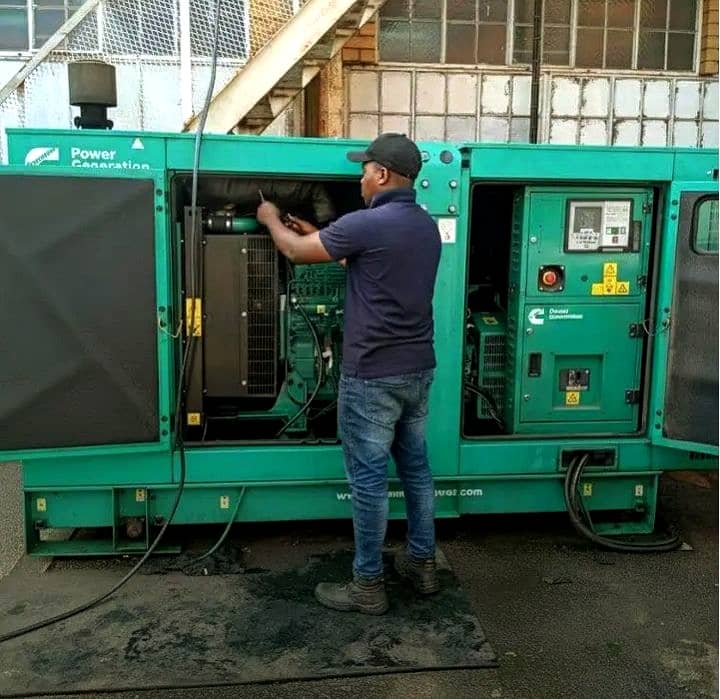
Wet stacking is one of the most common — and most preventable — causes of generator underperformance in standby installations, and it’s directly relevant to any Lagos facility that sizes its generator for peak demand but usually runs it at a fraction of that load.
Diesel engines are designed to run efficiently under a substantial load — generally above 60–70% of rated capacity. When a generator is chronically run at light load (common when a facility oversizes its genset “to be safe,” or only powers a small portion of its total load through the generator), combustion temperatures stay too low for complete fuel burn.
The result: unburnt fuel and carbon accumulate in the exhaust system, cylinders, and turbocharger — literally “wet stacking” the exhaust path with residue. Over time this:
Load bank testing is a standard inclusion in a properly structured AMC — it’s listed above for exactly this reason, and it’s one of the services most reactive, call-when-broken maintenance arrangements never include, because it doesn’t fix a fault that’s already visible. It prevents one that hasn’t shown up yet.
Facility managers evaluating a PowerFix vs [competitor] decision are usually really asking one question: is it cheaper to pay for scheduled maintenance, or to just call someone when something breaks?
Here’s the honest comparison:
| Factor | Reactive-Only Repair | Structured AMC |
|---|---|---|
| Cost predictability | Unpredictable, spikes on failure | Fixed, budgetable |
| Downtime | Unplanned, often during peak demand | Minimized via scheduled servicing |
| Parts sourcing | Reactive, often at a premium under time pressure | Planned, often stocked ahead |
| Failure detection | After symptoms appear | Fluid analysis and load testing catch issues early |
| Wet stacking / smoke issues | Addressed only after visible damage | Prevented via scheduled load bank testing |
| Response time | Depends entirely on technician availability that day | Governed by contracted SLA |
The gap widens the larger and more critical the installation. For a small single-unit setup running a few hours a week, reactive repair from a competent technician may genuinely be sufficient. For anything running continuous or near-continuous hours — which describes a large share of commercial and industrial Lagos operations — the math consistently favors a structured contract, because a single unplanned failure during peak operating hours typically costs more in lost production or lost revenue than a year of scheduled maintenance.
Everything above — run-hour-based scheduling, smoke diagnosis, wet stacking prevention — depends on one thing: actually knowing your generator’s real-time condition instead of guessing from the last service date.
Most facilities don’t have this visibility. They know when the generator was last serviced. They don’t know how many hours it’s run since, what its current oil condition looks like, or whether load patterns are quietly building toward a wet stacking problem.
This is the specific gap the PowerFix Digital Monitor is designed to close — a live, continuously updated read on generator health (run-hours, load patterns, and key fault indicators), rather than a paper log that’s accurate the day it’s written and stale every day after.
If you take one thing from this guide, make it this: generator maintenance in Lagos fails most often not because of bad technicians, but because of bad scheduling — servicing by calendar instead of by actual condition and run-hours.
Run a free PowerFix Digital Monitor check — get your generator’s health score in under 2 minutes.
It’ll tell you where your unit actually stands against the benchmarks covered in this guide — run-hours since last service, load pattern risk for wet stacking, and whether you’re due for a diagnostic visit before a symptom like black or white smoke forces the issue. If your generator is overdue, or if reactive repair has been costing you more than a structured contract would, this is the fastest way to find out — and the first step toward a PowerFix generator maintenance plan built around your actual operating hours, not a generic template. Or head to the PowerFix Digital Monitor tool directly, or the PowerFix homepage to book a full generator repair visit in Lagos.