Physical Address
304 North Cardinal St.
Dorchester Center, MA 02124
Physical Address
304 North Cardinal St.
Dorchester Center, MA 02124
Accountability Centered Maintenace
Generator Annual Maintenance Contract Nigeria | PowerFix
Most generator AMCs sound identical on a sales call. The difference between one that actually prevents breakdowns and one that’s a glorified oil-change subscription is all in the clauses nobody asks about.
If you’ve already read our guide to generator maintenance in Lagos, you’ll know an AMC gets a brief mention there as one part of a bigger picture. This post is the deep dive: what a generator annual maintenance contract in Nigeria should actually contain, clause by clause, and which terms are the ones separating a contract that prevents downtime from one that just collects a retainer fee.
An AMC is the difference between reactive firefighting and predictable uptime — but only if it’s structured properly. A document that just says “quarterly servicing included” isn’t a maintenance strategy. It’s a discount coupon.
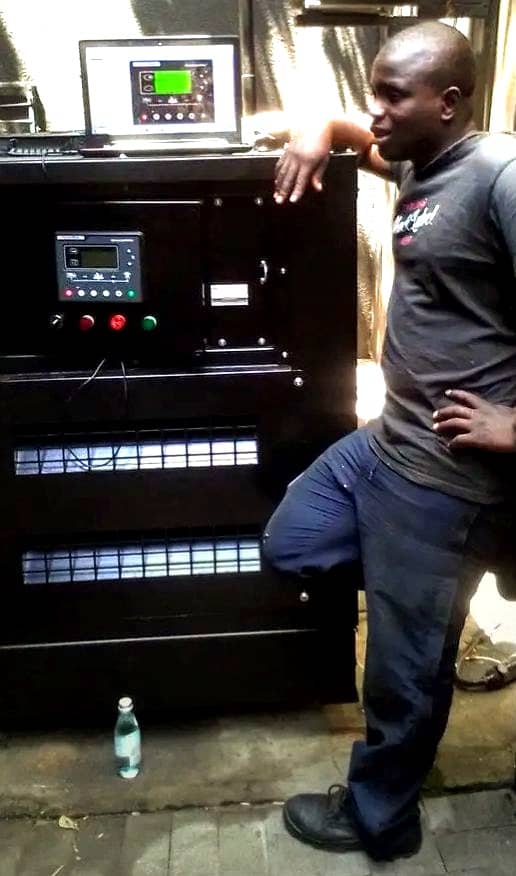
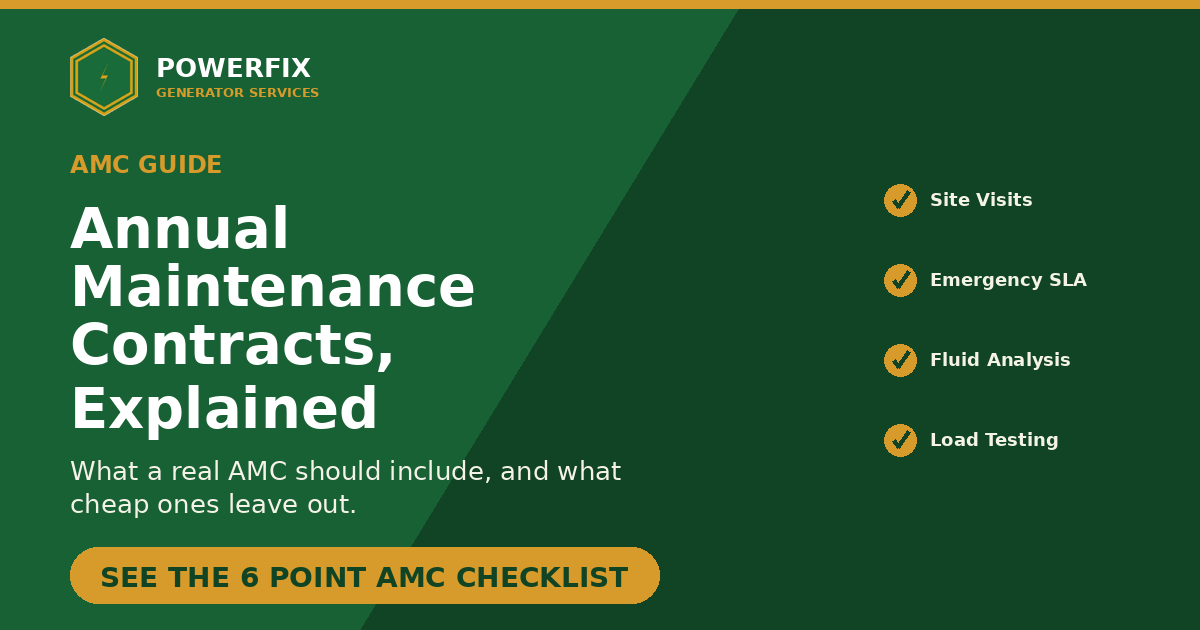
Six things separate a real maintenance contract from a service subscription in name only.
Not calendar-only. Visits should be scheduled against actual logged run-hours — typically every 250–300 operating hours — with a full service checklist executed and documented at each visit. A contract that only commits to “quarterly visits” without referencing run-hours is already assuming your genset behaves like a backup unit, which most continuous-run Lagos installations don’t. This matters even more heading into wet-season months — see our guide to protecting your generator during rainy season for the specific checks that should fold into a scheduled visit at that time of year.
A defined response-time commitment — a guaranteed technician on-site within a set window of a fault call — not a “we’ll try to get there” arrangement. This is the clause to interrogate the hardest when comparing providers. Ask any prospective contractor if their emergency response works just like the PowerFix emergency response. What their time commitment looks like on paper, in writing, with consequences if they miss it. If a contract doesn’t name a specific number of hours, that’s not an SLA; it’s a hope.
Periodic lab analysis of engine oil and coolant samples catches internal wear — metal particulates, coolant contamination — before it shows up as a breakdown. This is one of the most underused tools in Lagos generator maintenance, largely because it doesn’t produce an obvious invoice line the way a part replacement does. The industry practice behind this is formalized in standards like ASTM D6224, which governs in-service oil monitoring for auxiliary power equipment — the same logic behind why a lab report can catch a failing bearing or head gasket months before it fails outright.
Scheduled, typically annual, testing where the generator runs under a controlled artificial load to verify it can actually deliver rated capacity — and to burn off carbon buildup from light-load operation. In facilities where uptime is genuinely critical, this kind of testing is exactly what standards like NFPA 110, the standard for emergency and standby power systems, are built around. If your AMC doesn’t mention load bank testing at all, ask why — it’s the single clause most responsible for catching wet stacking before it becomes a performance problem.
Contract holders should sit ahead of one-off callers in the repair queue, with parts sourcing prioritized for contracted clients. This matters more than it sounds — during a bad storm week or a citywide outage, every provider’s phone rings at once, and priority terms are what determine whether you wait two hours or two days.
Every visit should generate a service record — what was checked, what was replaced, what readings were logged. Without this, you have no way to prove warranty compliance or diagnose recurring faults. A contractor who can’t produce a clean paper trail across a year of visits is a contractor you can’t actually verify is doing the work.
A PowerFix generator maintenance contract is built around exactly these six pillars, with run-hours — not just calendar dates — driving the visit schedule.
Not every AMC should look the same, because not every genset is the same class of equipment. The international classification system for generating sets — ISO 8528-1 — defines how gensets are rated and applied, and that classification is a useful reference point when scoping a contract: a small commercial-grade unit running as pure backup doesn’t need the same visit frequency or load-testing rigor as a continuous-run industrial genset supporting a manufacturing line. A properly scoped AMC reflects that difference in its pricing and terms, not just in a single flat annual fee regardless of size or duty cycle.
A low quote isn’t automatically a bad sign — but certain omissions are, regardless of price:
| Red Flag | Why It Matters |
|---|---|
| No named response-time SLA | “Fast response” isn’t a commitment. If there’s no number of hours in writing, there’s nothing to hold them to. |
| Visit schedule is calendar-only | Ignores run-hours entirely, which means a continuous-run genset gets serviced too late without anyone noticing. |
| No fluid analysis included | Cutting this is the easiest way to shave a quote — and the easiest way to miss a failure months before it happens. |
| Load bank testing not mentioned | Usually, wet stacking and true output capacity are never actually verified, only assumed. |
| No documentation promised | You have no way to prove what was actually done at each visit, or to spot a pattern across a year. |
| Parts sourcing not addressed | Leaves you exposed to full retail pricing and long wait times exactly when you need a part fastest. |
The pattern to watch for: cheap AMCs usually don’t lie about what they include — they’re just quiet about what they leave out. Ask for all six pillars above by name, in writing, before signing anything.
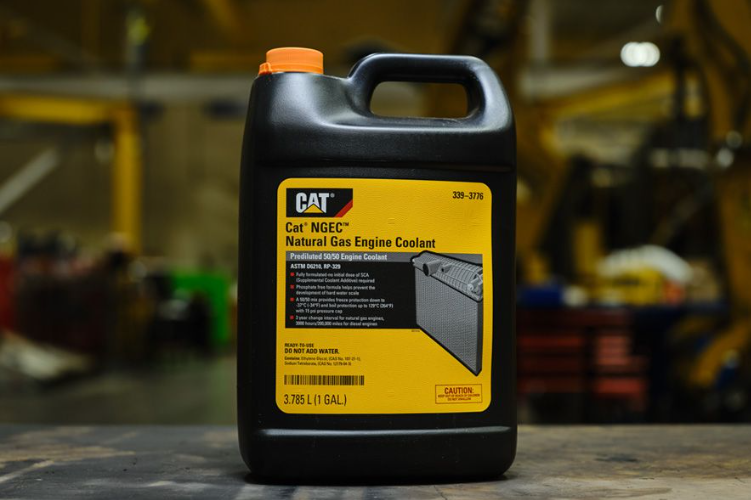
Any provider offering a PowerFix generator maintenance contract should be able to answer all six without hesitation — and if a competing quote can’t, that’s the real comparison to make, not just the price on the invoice.
Before signing any AMC — with us or anyone else — it helps to know exactly where your generator actually stands. Run-hours since last service, current condition flags, and whether load pattern risk is already building toward a wet stacking problem.
Run a free PowerFix Digital Monitor check — get your generator’s health score in under 2 minutes.
It’s the fastest way to see whether the contract you’re being offered actually matches what your unit needs. Head to the PowerFix Digital Monitor tool directly, or visit the PowerFix homepage to talk through an AMC built around your actual operating hours, not a generic template.