Physical Address
304 North Cardinal St.
Dorchester Center, MA 02124
Physical Address
304 North Cardinal St.
Dorchester Center, MA 02124

Accountability Centered Maintenace
Generator Maintenance Harmattan Season | PowerFix
Rainy season gets all the attention. Harmattan quietly does just as much damage, through the one thing most maintenance checklists don’t cover closely enough, dust.
We’ve already covered what rain does to a generator in our guide to protecting your generator during rainy season. The Harmattan, the dry, dust laden wind that sweeps across West Africa roughly from November through March, is the opposite problem with an equally real cost. Instead of water finding its way in, it’s fine desert dust settling into every filter, fin, and contact point on the unit, and it does this quietly enough that most people don’t notice until something’s already restricted.

Rainy season failures tend to announce themselves, standing water, a smell of contaminated fuel, visible corrosion. Dust damage is slower and less obvious. A partially clogged air filter doesn’t stop a generator from starting, it just makes the engine work harder for the same output, quietly increasing fuel consumption and wear until someone finally checks the filter and finds it caked solid. That gradual quality is exactly why harmattan maintenance gets skipped more often than rainy season prep, there’s no single dramatic event forcing the issue.
This is the single biggest harmattan maintenance item, and the one most schedules don’t adjust for the season. A filter that’s fine on a normal quarterly interval can become significantly restricted well before that interval is up once dust levels rise.
Air filter performance is measured against standardised test conditions, laid out in standards like ISO 5011, which covers dust collection efficiency and airflow restriction for exactly this kind of equipment. The practical takeaway for harmattan season is simple, restriction builds up faster than the calendar assumes, so the calendar shouldn’t be the only thing deciding when a filter gets checked.
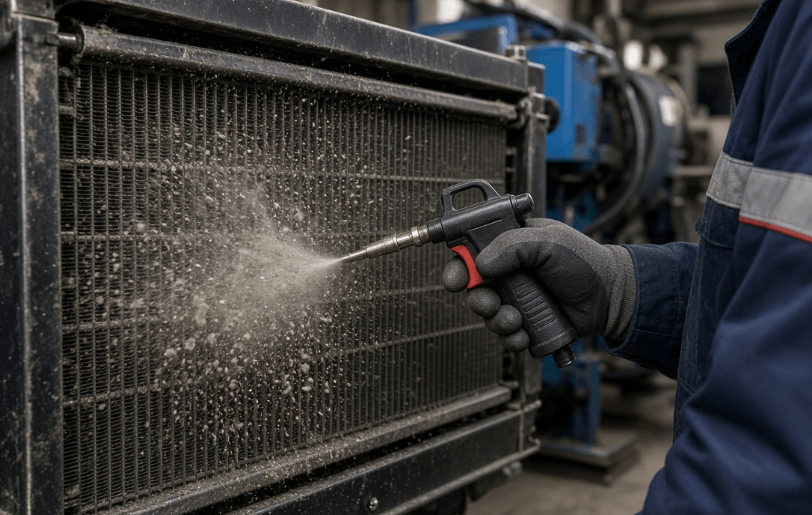
Fine dust doesn’t just clog the air filter, it settles into the radiator fins and cooling system too, reducing the surface area available for heat dissipation. A generator that’s running fine in terms of fuel and starting can still be slowly overheating because its radiator is caked with a season’s worth of dust it was never designed to handle.
Harmattan mornings run noticeably cooler than the rest of the year, and cold affects starting battery performance more than most people expect, even in a climate that’s warm the rest of the year. A battery that’s already marginal can struggle specifically during harmattan mornings and test fine again once temperatures rise later in the day, which makes this an easy problem to miss if testing only happens midday.
Fine dust finds its way into control panels and connector housings just as persistently as it does filters and radiators, and a buildup on electrical contacts can cause intermittent faults that are genuinely hard to diagnose because they don’t happen consistently.
Cross season note: if you’ve read our rainy season guide, the theme repeats here in reverse. Rain finds gaps and pools water, harmattan finds gaps and packs them with dust. Both are about the same underlying maintenance discipline, checking condition more often than the calendar assumes, not less.
None of these individually take long, but skipped together across a full harmattan season, they add up to exactly the kind of gradual, hard to diagnose wear that a PowerFix generator maintenance contract is built to catch before it becomes a repair call.
Dust related wear builds up quietly, which makes it exactly the kind of thing worth checking on a schedule rather than waiting for a symptom. Run-hours, service history, and any early warning signs all feed into a clearer picture of where your unit stands right now.
Run a free PowerFix Digital Monitor check, get your generator’s health score in under 2 minutes.
Head to the PowerFix Digital Monitor tool directly, or visit the PowerFix homepage to talk through a maintenance schedule that actually adjusts for the season you’re in.